Homemade Pizza Dough Recipe: The Ultimate Guide to Perfect Crust
There’s something magical about the smell of freshly baked pizza dough filling your kitchen. That warm, yeasty fragrance that promises deliciousness is just moments away. If you’ve ever wondered how restaurants achieve that perfect crust texture, I’m here to share my secret: making pizza dough at home is easier than you think, and the results are absolutely worth it.
Why Make Homemade Pizza Dough?
Making pizza dough from scratch might seem intimidating, but once you try it, you’ll wonder why you ever settled for store-bought options. The beauty of homemade dough lies in its simplicity and freshness. You control every ingredient, ensuring no preservatives or artificial additives end up in your family’s dinner. Plus, the satisfaction of creating something delicious with your own hands is priceless.
I remember the first time I attempted homemade pizza dough. I was nervous, certain I would mess it up somehow. But following this straightforward method taught me that pizza making is more art than science, and with a little practice, anyone can master it.
Understanding the Ingredients
Let’s talk about what makes this homemade pizza dough recipe so special. Each ingredient plays a crucial role in creating that perfect crust texture we all love.
Warm Water (100-110°F)
The temperature of your water is more important than you might think. Too hot, and you’ll kill the yeast. Too cold, and the yeast won’t activate properly. I like to think of it as baby bath water temperature – warm but not hot to the touch.
Active Dry Yeast
Yeast is the magic ingredient that makes your dough rise and develop those lovely air pockets. Using active dry yeast ensures your dough will have that classic pizza crust texture.
Granulated Sugar
Don’t worry – the sugar isn’t there to make your pizza sweet. It feeds the yeast, helping it activate and creating that beautiful rise. The small amount used adds just enough sweetness to balance the flavors.
All-Purpose Flour
This is the foundation of your dough. I’ve found that all-purpose flour creates the perfect balance between tenderness and structure. The protein content is ideal for pizza dough that’s easy to work with but still has great texture.
Olive Oil
Olive oil adds richness and helps create a tender crust. It also helps prevent the dough from sticking and adds a subtle flavor that complements the other ingredients beautifully.
Salt
Salt might seem like a small player, but it’s essential for flavor development. It strengthens the gluten structure and enhances all the other flavors in your pizza.
Step-by-Step Instructions
Now for the fun part – let’s walk through each step together. I’ll share my tips and tricks to ensure your homemade pizza dough turns out perfectly every time.
Step 1: Activating the Yeast
Begin by combining your warm water, yeast, and 1 teaspoon of sugar in your stand mixer bowl. This step is called “blooming” the yeast, and it’s magical to watch. Within 5-7 minutes, you’ll see a frothy layer form on top – this means your yeast is alive and ready to work its magic.
If you don’t see bubbles forming after 10 minutes, your yeast might be old or your water temperature was off. Don’t worry – just start over with fresh ingredients.
Step 2: Mixing the Dough
Once your yeast is frothy, add the flour, olive oil, salt, and remaining sugar. Using the dough hook attachment, start on low speed for about a minute to combine everything. Then increase to medium-low and let the mixer work its magic for about 5 minutes.
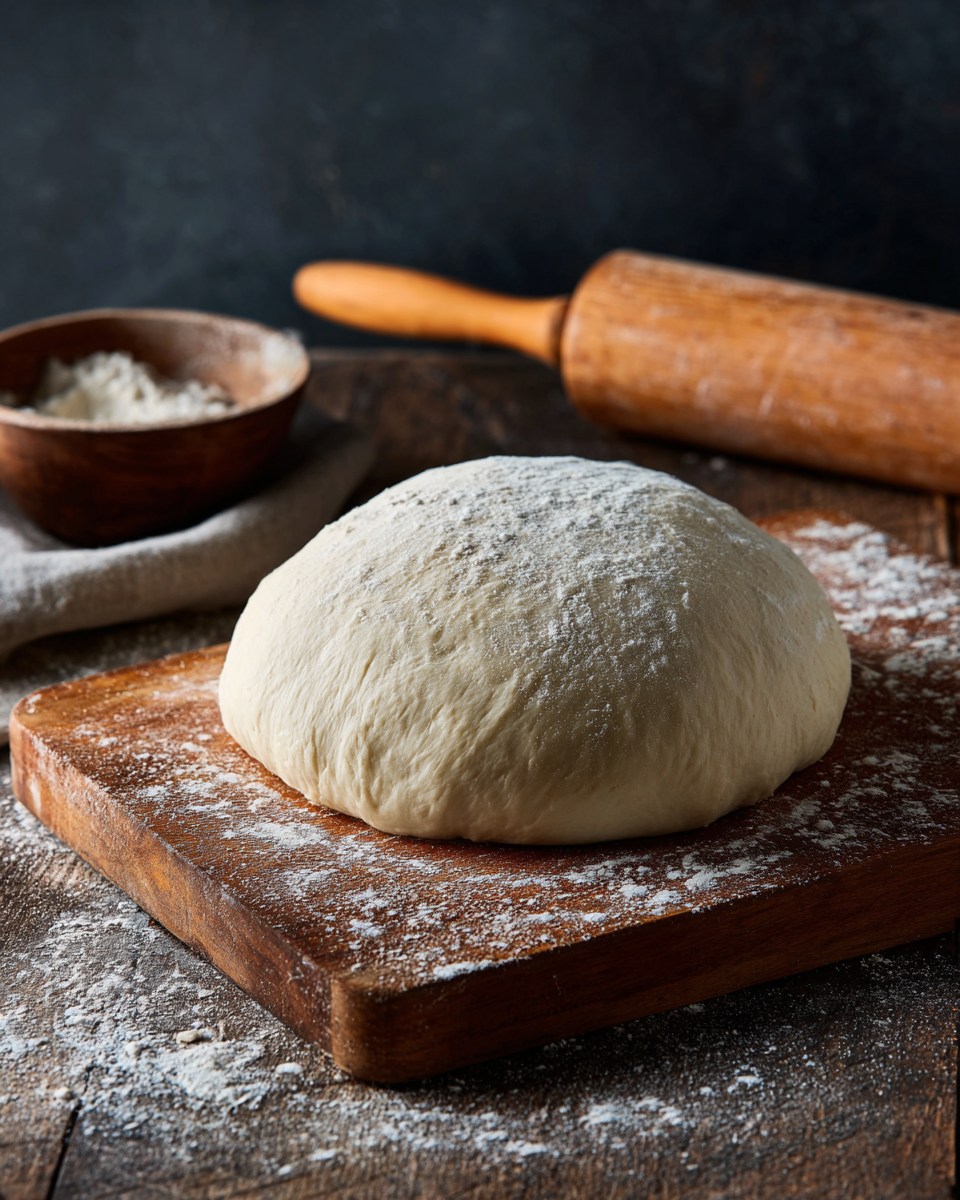
You’re looking for the dough to form a smooth ball that springs back when you gently poke it. If it’s still sticky after 5 minutes, add flour one tablespoon at a time until it reaches the right consistency.
Step 3: The First Rise
Shape your dough into a tight ball on a lightly floured surface, then place it in an oiled bowl. Cover with plastic wrap and find a warm, draft-free spot for it to rise. I like to use my oven with just the light on – it creates the perfect warm environment.
Wait patiently for 45-60 minutes while your dough doubles in size. This is when the yeast works its magic, developing flavor and creating those lovely air pockets.
Step 4: Prepping for Baking
Preheat your oven to 450°F about 15 minutes before your dough is ready. This ensures your oven is properly heated when it’s time to bake.
Step 5: Shaping Your Pizza
Once your dough has doubled, punch it down gently to release the air. On a floured surface, shape it into a 12-inch circle. I like to make the edges slightly thicker to create that classic pizza crust rim.
Transfer your shaped dough to a parchment-lined baking sheet or pizza pan. If desired, brush the edges with olive oil for extra flavor and a beautiful golden color.
Step 6: Baking to Perfection
Bake for 12-15 minutes, watching for that perfect golden brown color. The cheese should be melted and bubbling, and the crust should sound hollow when tapped.
Pro Tips for Perfect Pizza Dough
After making countless batches of homemade pizza dough, I’ve learned a few tricks that make all the difference.
First, don’t rush the rising process. While it’s tempting to speed things up, giving the yeast proper time to work develops deeper flavor and better texture.
Second, when shaping your dough, handle it gently. You want to preserve those air bubbles the yeast worked so hard to create.
Third, if you’re new to pizza making, don’t worry about creating a perfect circle. Rustic, slightly irregular pizzas have their own charm and taste just as delicious.
Common Questions Answered
Can I make this dough without a stand mixer? Absolutely! While a mixer makes it easier, you can definitely knead the dough by hand. It will take about 8-10 minutes of kneading to achieve the right texture.
What if I don’t have active dry yeast? You can use instant yeast instead. The main difference is that instant yeast doesn’t need to be bloomed first – you can mix it directly with the dry ingredients.
Can I freeze pizza dough? Yes! After the first rise, shape the dough into balls, wrap tightly in plastic wrap, and freeze for up to 3 months. Thaw in the refrigerator overnight before using.
Final Thoughts
Making homemade pizza dough might seem like a daunting task at first, but I promise it’s one of the most rewarding kitchen skills you can master. The joy of serving pizza made completely from scratch to family and friends is something special.
Remember, practice makes perfect. Your first attempt might not be restaurant-quality, but each time you make it, you’ll learn something new and improve your technique. Before you know it, you’ll be making pizza dough like a pro, enjoying delicious homemade pizza whenever the craving strikes.
So roll up your sleeves, gather your ingredients, and get ready to experience the magic of homemade pizza. Your kitchen is about to become your favorite pizza place!
Homemade Pizza Dough
Ingredients
Equipment
Method
- In the bowl of a stand mixer, stir together the warm water, yeast, and 1 teaspoon of sugar. Let the mixture stand until it is very frothy on top, 5 to 7 minutes.
- Add the flour, olive oil, salt and remaining 2 teaspoons of sugar to the bloomed yeast. Attach the dough hook and mix on low for about 1 minute. Increase to medium-low speed until the dough comes together in a ball, is smooth, and springs back when poked, about 5 minutes. If your dough is still very loose and sticky after 5 minutes, mix in more flour a tablespoon at a time, as needed.
- Shape the dough into a tight ball on the counter and place it in a lightly oiled large bowl. Cover with plastic wrap and place in a warm, draft-free place to rise until the dough has doubled in size, 45 to 60 minutes.
- Preheat the oven to 450°F.
- When the dough has doubled, punch it down and shape it into a 12” circle on a lightly floured surface, making a thicker rim around the outside edge. Transfer the dough to a parchment paper-lined baking sheet or pizza pan and reshape into a circle if needed. Brush the rim with olive oil if desired, and top with sauce and your choice of pizza toppings or as directed by your recipe.
- Bake for about 12 to 15 minutes or until the crust is golden brown and the cheese is melted and bubbling.